

Maximizing Practicing Efficiency
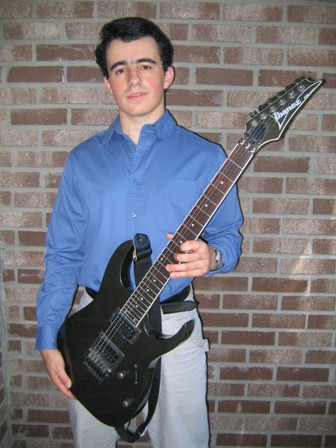 In the article “natural talent“, I talked about some non-musical aspects that often prevent people from reaching their goals. With that said, there are also a great many things that are specific to musical training that also make a huge difference. In this essay, I will focus on practicing.
We have all heard that practicing is the surest way to improve skills in any endeavor. Everybody has heard the phrase “Practice makes Perfect”. Few people know however what it means to practice guitar correctly. For many, practicing quickly becomes a tedious chore rather than a rewarding and (most importantly) PRODUCTIVE investment of time. As a consequence, many people either stop practicing all together or continue through sheer discipline but wonder why they are seeing so little progress. There are many reasons for that, and I will discuss several.
First of all, how would one define the word “practice”? Most people only have a vague idea of what it means. At best people would imagine that it involves playing their instrument. In fact a much more useful definition would be something along the lines of: action with intent to achieve a purpose. What can we learn from this? When you practice, you must do so with intent of making forward progress as a player. Learning how to practice is the thing that EVERY beginner should learn to do when they first begin playing, but this is most often not the case. Instead a student automatically assumes that they know how to practice and jumps right into learning songs. Guess what happens? The student will most likely plateau in playing ability after reaching a certain level if they are lucky to even learn to play at all.
Another very common obstacle that players face is the physical nature of guitar technique. It is useful to learn to make a distinction between the art of creating music and training the hands to perform the incredibly complex movements required to play. Too many people don’t realize that guitar technique is a science that must be learned. It is easy to neglect technique since playing guitar is all about making music. As a result the student will focus all their efforts on the musical aspects of playing (which is great), but when the music requires a higher level of technique, the student will not be able to execute the phrase with the required grace and flow. The very concept of technique is dictated by the music that you want to play. So when you encounter difficulty in playing a certain piece of music you must discover what flaws in your technique are preventing you from playing like you desire. The motions required to play an instrument are NEW to the body, and must be TRAINED just like we all had to learn to walk and use our body in daily lives when we were children. This requires a very high level of awareness of the body and this is something that most people never pay attention to. Think of a programmer who enters hundreds of lines of code (instructions to the computer) to produce a specific result. If for some reason, the programmer stops paying attention to what he is doing or if he does not know how to overcome a particular problem, the program will not work! Learning a technique on guitar (or any instrument) is exactly like that.
Moving along, lets discuss another problem that often affects the quality of practice and that is failure to pay attention to the task at hand. It is very common to get distracted while practicing. This very often happens because most of the time we don’t know WHAT we’re supposed to be focusing on in our practice. As a result it is frequent to see students playing the trouble passage or lick over and over in the hope that the notes are going to magically appear. Very often the problem can be solved simply by paying careful attention to what is happening when you try to play a certain phrase that you always mess up. Now ask yourself: what SHOULD my fingers be doing in this spot? Am I clear on the fingering and pick strokes? Do I have extra tension present in my shoulders that is making it impossible to direct the fingers to their notes? Very often just by asking these simple questions and performing an analysis of the problem you will begin to see the solution.
Yet another problem that plagues students is not being organized. It is important to have a sense of direction while practicing. This can be achieved by writing out a plan (practice schedule) before sitting down with your guitar. This way you can achieve MUCH greater results by practicing for only 15 minutes (because you will be focused and clear on what you will be doing) than just practicing random things for an hour jumping from one to the next. How do you come up with a good practice schedule? That depends on your long term goals that you must set for yourself as a musician. After that is done, you must determine what tools (sets of skills) are needed to get to the level you want to be. Very often students are not clear on what tools they need and how to acquire them (this is what your teacher should be helping you with) After this is done, practicing becomes sort of like a journey to your destination (ultimate goals). With each practice session you get a step closer to reaching your dreams. Start thinking of practicing in this way and you will see powerful things begin to happen.
Practice does not make perfect, it makes permanent, but PERFECT practice DOES makes perfect! Always remember that. Simply sitting down with your guitar and mindlessly moving your fingers around for 2 hours every day will not bring you the results you seek. This is especially deadly when it comes to practicing technique. If you train your hands to make sloppy, imprecise movements that are full of tension, guess what, these are the instructions that you are programming into your muscles. Your muscles remember ANYTHING they do enough times. So what do you think will happen, if your practice is sloppy? That’s right, your playing will be sloppy too! Enough said.
It is very common to read an article like this and say: “This makes sense, but it doesn’t really apply to my case, because I know how to practice.” Very often a student will THINK that they are practicing correctly when they are NOT. It is easy to underestimate the complexity of learning an instrument. Do not make this mistake. Unless you are already a very advanced player, chances are you can benefit from reviewing your practice habits (working with a good teacher is the best way to do this). This will only help you move forward as a player. What is the best way to know if you’re practicing correctly? It is simple, record your playing and LISTEN. Be honest with yourself. Do you hear things that could use improvement? If so practice them for awhile and see if your work produces RESULTS. (are the mistakes disappearing and is the phrase becoming easier to play?) So judge the effectiveness of your practicing by your playing. It is really that simple.
Hopefully now you understand what practicing is about, and I hope that you take the advice in the essay and apply the concepts to your own playing. You will amaze yourself with the results!
You can contact me at mikephilippov@yahoo.com I would be happy to answer any questions you may have. I reply to all e-mails.
Visit Mike’s sites:
©2006 Mike Philippov All Rights Reserved
Used by Permission












Dear Mike ,
YOU told this on a incredible understanding way ,..just like it is !
I have making those mistakes for years ,so a quit playing!
But after reading your esay,i start again,and try to follow your advise to the letter,becouse it is so true!
The only trouble was ,stay focused on what to practise,but when am go drifting away ,i go again reading your words of wisdom!
Wich me luck !
guy.